Keep
Speaking Out
Your voice matters!
Your public speaking workshop was filled with practical tips and advice to help you speak out. This site exists to help you continue speaking out; at school, at work and throughout your life!

Workshop Refresh
Introduction
Here you'll find a series of films to remind you of the content of your workshop at school.Aims:
1. Refresh and embed your learning
2. Provide a useful resource you can return to whenever you need it
First let's meet our two online trainers, James and Ore.
Now let's hear James remind us why public speaking matters.
The Communication Triangle
© Speakers Trust 2024. All rights reserved.
Workshop Refresh
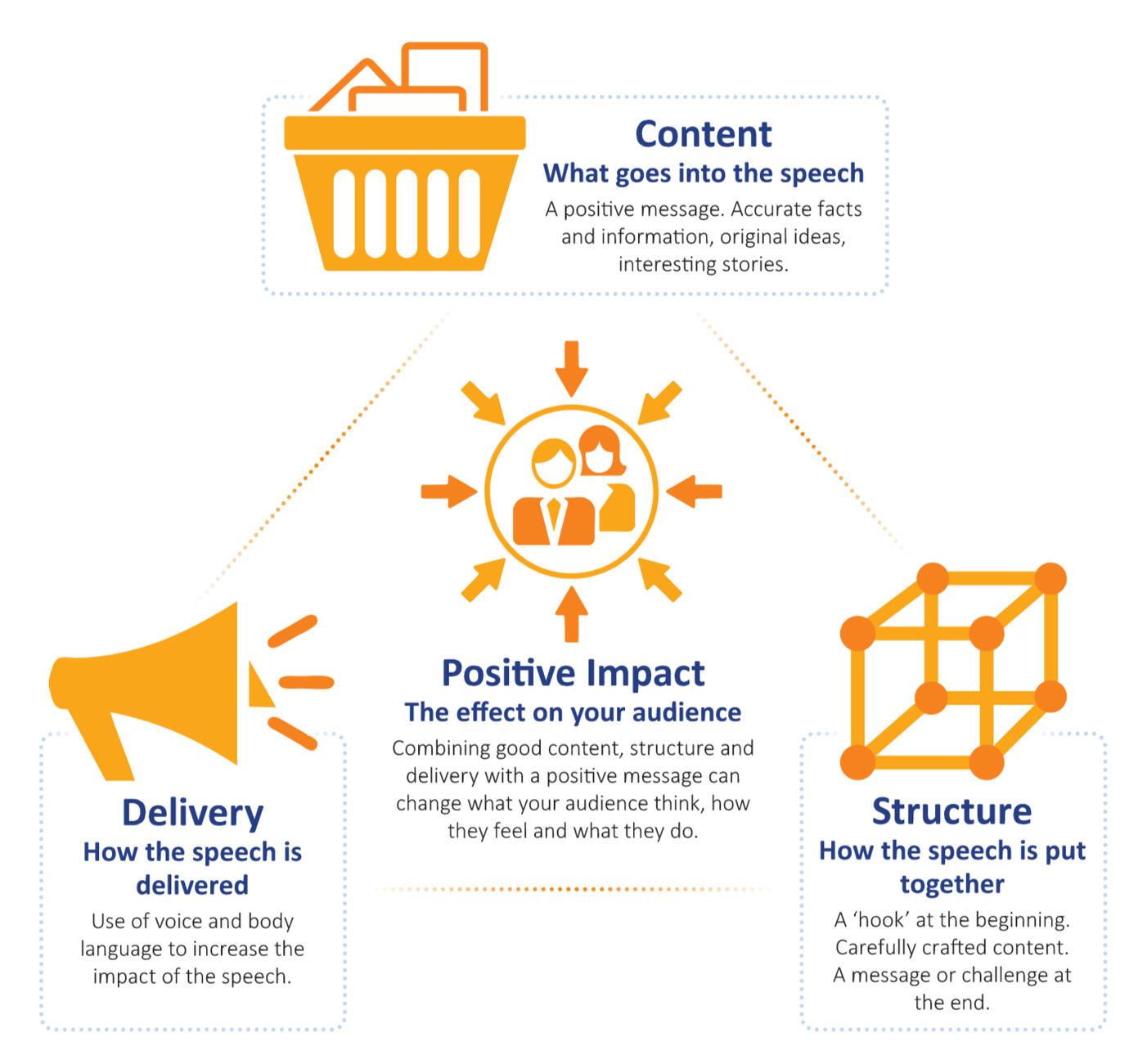
The Communication Triangle
There are three key pillars of public speaking, and they form The Communication Triangle.1. Content
2. Delivery
3. StructureVital to all three, is the Positive Impact you want your speech to have.
1. Content
© Speakers Trust 2024. All rights reserved.
Workshop Refresh
1. Content
Content is knowing what to say.This could include:- a story / anecdote
- facts
- opinionsHere, we breakdown all of our top tips for generating engaging content. We also cover how to choose appropriate language.
1. Using Stories
2. Using Opinions
3. Using Facts
4. Choosing your language
5. Using P.E.P
Remember:
- Use facts and opinions together, neither work well on their own.
- If you want to use a technical or slang term that your audience might not understand, make sure you explain it so everyone can follow your points.Reflection
What type of content comes most naturally to you?
How can you make your stories more compelling?Challenge
For the rest of the day, when someone asks you a question, try to answer in the P.E.P format.
2. Structure
© Speakers Trust 2024. All rights reserved.
Workshop Refresh
2. Structure
Structure is knowing how to order your content.Here, we share our key ideas for putting your message together. This includes:1. Engaging opening
2. Signposting through your points
3. Powerful closeIt may help to think of your speech as a journey. As the speaker, you act as a guide who's responsible for showing your audience the way.
First, what do we mean by Structure?
The Beginning
Here's a compilation of speeches with strong beginnings. Which one hooks your attention the most?
The Middle
Examples
Dwayne structures his speech by identifying a problem, describing the impact and then offering his solution:
Maddie structures her speech by comparing and contrasting two scenarios, bouncing back and forth between the two to make her points clear.
Rosie uses a personal story and covers the past, present and future to structure her speech:
The End
These are the endings of the speeches we saw the powerful openings for earlier. What techniques can you see in action here?
Remember:
- Signposts will help you remember what you want to say, as well as help your audience follow along.
- When preparing your speech, start with the end! It's important to know your destination.Reflection
Which example of structuring your content (Dwayne, Maddie or Rosie) did you find the most engaging, and why?
How will you choose to capture your audience's attention with your opening?Challenge
Try opening your speech in 3 different ways, and see which one feels most powerful. You could ask someone to listen and share their feedback too.
3. Delivery
© Speakers Trust 2024. All rights reserved.
Workshop Refresh
3. Delivery
Delivery is knowing how to share your points.We have lots of tips to help you deliver confidently. We'll cover:1. Body language
2. Facial expressions
3. Breathing
4. Managing nerves
5. Pitch, Pace, Power, Pause
6. Stride, Stand, Smile, Speak, StayYou want your audience to see you, hear you and connect with you. Knowing how to deliver your speech will help you achieve all of these things!Let's start by learning some simple rules:
Now let's dive into the techniques.
1. Body Language
2. Facial Expressions
3. Breathing
4. Managing Nerves
5. Pitch, Pace, Power, Pause
6. Stride, Stand, Smile, Speak, Stay
Remember:
- The audience being able to see you, hear you, and connect with you are your key goals when delivering your speech.
- Mastering your breathing will help with lots of other things, especially the 4 P's.
- If in doubt, pause and smile.Reflection
When Ore speaks, what do you notice about her delivery?
When you speak, what do you think you already do well, and what do you think you could improve?Challenge
Over today and tomorrow, pay close attention to how different adults speak. Thinking about all of these tips and techniques, which ones do you think they could implement to be even better public speakers? Take these observations into your own delivery, to show them how it's done!
4. Positive Impact
© Speakers Trust 2024. All rights reserved.
Workshop Refresh
Positive Impact
The key to a successful speech is having a positive impact on your audience.You might:- educate them
- persuade them
- entertain them
- inspire themor you may do a combination of these things.It's important to present solutions to problems. This should involve a clear call to action, asking your audience to think, feel or behave differently as a result of what you've shared with them.
Here are some examples of Calls to Actions being used in speeches. Notice how they all ask us to think, feel or behave differently, and some ask us to do more than one thing differently. Which one compels you to change?
Remember:
- Use your Content to show your knowledge and understanding of your topic.
- Use your Structure to illuminate your key message for your audience.
- Use your Delivery to show that you care about your message.
- Use your Call To Action to compel your audience to think, feel or behave differently as a result of hearing your speech.Reflection
Do you want your audience to think differently, feel differently or behave differently after they've heard your speech? Or do you want them to do more than one?Challenge
Listen to an advert, a charity appeal and a political speech and pay close attention to each of their Calls to Action. Which one did you find most effective and why? Try to use some of their techniques in your own speech.
Conclusion
© Speakers Trust 2024. All rights reserved.
Workshop Refresh
Conclusion
At your workshop, and through this course, you've learned about the Communication Triangle and how to implement this in your public speaking.You can craft interesting content, structure it to help your audience and deliver it powerfully to ensure you have a positive impact on your audience.Remember, you can come back here anytime you'd like a refresher!
NEXT:We suggest you dive into our next catalogue of resources, to develop your public speaking skills even further.
© Speakers Trust 2024. All rights reserved.